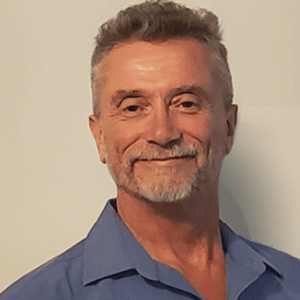
By Mark Lemohr, Third-Generation Healer | 50+ Years of Healing Experience
Summary
If you're always hard on yourself, your inner critic took shape inside the core relationship, the relationship you have with yourself. That relationship starts forming as early as six to eight weeks old, through thousands of small emotional exchanges with a caregiver. When those exchanges are inconsistent, cold, or missing, a baby feels unsafe or unwanted long before it has words. Later, the words of the people around it get attached to that feeling. The harsh inner voice you hear as an adult is that early feeling, still running with someone else’s words. Since it began before you had words, words alone rarely change it. It can be repaired on two levels: daily practice that retrains the mind, and Soul-Level Trauma™ healing for the wounds that formed below the mind.

You know the voice. It shows up right after you hit send on the email, the second you walk out of the meeting. It creeps in at social gatherings and when you’re out on a date. It shows up at two in the morning when the house is quiet and it has you all to itself, and it wakes you up for a replay. It tells you that you said the wrong thing, and then gives you a list of things you should have said instead.
It tries to ride along with you to the job interview, or to the meeting with your boss, or to see the big client you’ve been trying to close the deal with. You’ve probably tried to argue with it. Maybe you’ve read the books, stuck affirmations on the bathroom mirror, or worked through it in therapy, and for a while it got quieter. Then something small happened, a friend didn’t text back or a plan fell through, and the voice came right back like it had never left.
The disappointment adds another layer of “I told you so.” Sometimes the voice insists it’s all your fault. Other times it flips and tells you the world is unfair and none of it is your fault at all. Either way, it speaks up without anyone asking for its opinion.
There’s a reason you’re so hard on yourself, and a reason the inner critic keeps coming back.
Why Am I So Hard on Myself?
You're hard on yourself because your inner critic learned its lines inside the relationship you have with yourself, which I call "the Core Relationship™." That relationship started forming before you could talk, so the harsh inner voice and negative self-talk you hear today are an early conclusion about who you are, still running in your own voice.
You weren’t born talking to yourself that way. Before words, your first communications were emotional. You didn’t think something was wrong with you yet. You felt unsafe, or maybe even unwanted. As you grew past tone of voice as the main signal and learned to speak, you started absorbing spoken opinions about who you are, from a parent, a teacher, a coach, or a group of kids at school. Because you were young, you couldn’t tell the difference between their message and your own thinking, so you took it in and filed it as the truth. Years later it’s still playing, only now it speaks in your voice, which is why it feels like it belongs to you. That voice was fed by someone else. It might be a parent’s disapproval, a teacher’s idea of motivating through ridicule, or the sting of rejection from a friend or a first love. Nobody is born disapproving of themselves. The voice is a blend of other people’s past judgements and your own young interpretation of them.
What Is the Core Relationship?
The core relationship is the relationship you have with yourself. It's the first relationship you were ever in, and every other relationship in your life, with a partner, your kids, your boss, your friends, passes through it first and gets colored by it.
Most people never stop to name it. They'll talk for hours about their marriage or their work and never notice the one relationship they're in around the clock, the one that shapes all the others and never gives them a day off.
Everything that happens to you gets filtered through how you already see yourself, from the way you hear a compliment to the way you react when a plan falls apart. That filter was built from how you reacted to the same kinds of events in the past and what they did to your self-perception. When the core relationship is healthy, a quiet friend is just a busy friend. When it’s damaged, a quiet friend makes you suspect you’re being ignored, because somewhere inside you believe you’re someone people can easily dismiss.
Then the fear starts creating the reality. People sense the uneasy energy you bring toward them, and they back away without knowing why. That confirms what the voice already told you, that you can’t have safe relationships with others. You believe it, and your thoughts, words, and actions, filtered through that damaged relationship with yourself, keep making it true. You picked up this pattern long before you could question it, and you can still change it. You can read more about the basics on my Core Relationship page.
Where Does the Inner Critic Come From?
The inner critic comes from the earliest emotional exchanges of your life, when the core relationship first starts forming somewhere between six and eight weeks old. That's the age when a baby first smiles back at a face it recognizes. That smile opens a two-way street, and what comes back down that street, thousands of times over the first year of life, lays the foundation for how a person will see themselves.
When those exchanges are warm and steady, a child settles into a quiet background feeling of being welcome here. When they're inconsistent, cold, or missing, a baby has no way to understand that the adult is the one who's struggling. All it can register is a feeling of being unsafe or unwanted. Later, as words arrive, that feeling finds its language in a parent's disapproving tone, a teacher's ridicule, or a friend's rejection, and it hardens into a belief: something must be wrong with me.
That feeling forms long before there are any words for it, which is a big part of why the voice is so hard to talk your way out of later on.
What Does Being Too Hard on Yourself Look Like Day to Day?
Being too hard on yourself shows up as small daily reactions that feel bigger than what actually happened. These are the patterns I see most often in the people I work with:
You apologize for things that aren't your fault, sometimes before anyone has said a word.
A compliment makes you uncomfortable, and you find a quick way to brush it off or explain why it isn't really true.
You replay conversations for hours or days afterward, hunting for the moment you got it wrong.
You work harder than everyone around you and still feel like you're one mistake away from being found out.
You feel responsible for other people's moods and keep quiet about your own needs so nobody gets upset.
You keep ending up with partners, friends, or bosses who treat you the way the voice talks to you.
Even when life is going well, part of you is braced for the other shoe to drop.
If three or four of those hit close to home, the relationship you have with yourself needs some strengthening, and that's true for most of us. Everyone makes mistakes, and they’re meant to teach us. We can grow a lot from being wrong once we stop berating ourselves and accept mistakes as part of how we learn. When you start to be on your own side, you can see the pattern for what it is, and a lot of the shame starts to loosen, because you finally understand that you’ve been doing your best with a story you never chose.
Why This Work Matters to Me
I'd love to tell you I came to this work with a calm, kind inner voice, but that would be a big fat lie. I was born with ADHD, which means my mind wants to run as much as the next person's and probably a wee bit more. In my teens and in my twenties, it ran me straight into clinical depression. So, I know the voice I'm describing in this article. I've lived with it, and I know how convincing it can sound and how far down it can take you if you don’t put it in check.
Why Can't You Just Talk Back to Your Inner Critic?
Talking back to your inner critic rarely works for long, because the voice is a symptom and arguing with a symptom leaves its source untouched. You can push back on every harsh thought you have, and the voice will simply return with new material, since the relationship underneath it hasn't changed.
Picture a radio that’s been playing in the back room of your house since you were a baby. You can talk over top of it, but if it’s still tuned to the same station, the moment you walk away it’s right back to full volume. Changing what plays means getting your hands on the dial and changing the source of the broadcast, which is the core relationship itself.
That voice has had decades of practice and it never once calls in sick. Honestly, I'd admire the work ethic if it were working for you.
Most of the standard advice for negative self-talk works on the thoughts themselves by challenging and reframing them. I use a version of that too, alongside work on the relationship those thoughts come from, including the part of it that formed before you had thoughts at all. It's also why affirmations fall flat for so many people. If you stand at the mirror and say "I am worthy" while every part of you believes the opposite, the voice hears one more thing to argue with. The new words have to feel at least a little bit true before they can take root.
How Do You Heal Your Relationship With Yourself?
You heal your relationship with yourself on two levels at the same time: the mind, through small daily practice that slowly retrains the voice, and the soul, through healing the wounds that formed before you had words for them.
I think of these as two of three rivers. In my approach, "Healing the Three Rivers™," the mind, the body, and the soul run alongside each other like three rivers, constantly shaping one another as we move through life, so a wound to one affects the others. The core relationship sits right where the mind river and the soul river meet, and the repair happens in about this order:
Notice the voice without fighting it. The first step is catching it in the act. When a harsh thought or a doubt shows up, name it quietly to yourself with something as simple as “there it is.” You don’t argue with it and you don’t agree with it. You just notice that it’s running. Once you observe its patterns, you start to understand that it runs as its own identity, almost as if it had a consciousness and an agenda separate from your own.
Ask where you first heard it. Most harsh inner voices sound like somebody. It might be a parent's tone, a teacher's favorite phrase, or the look on a coach's face. Once you can place it, it stops sounding like plain fact and starts sounding like someone else’s voice and someone else’s opinions.
Give it something truer to say. Skip the big affirmations your gut rejects. Choose a line that’s small and actually true for you, like “I made a mistake, everyone makes them, and I forgive myself,” and use it every time the old line plays.
Repeat it a little every day. This is the ground my “Daily Mind Tools™” were built for. They’re short, repeatable exercises for interrupting an old thought pattern and replacing it with one that serves you before the old ones have a chance to start. A few minutes first thing every day does more than one big effort once a month. You don’t wait for your mind to start the day with the same old negative dialogue and leave a good day to chance. Instead, you choose the programming and point the day’s thoughts toward what you want to create in your life.
Go deeper when the voice won't move. Some of what damaged the core relationship happened before you could remember it or talk about it. Daily practice can reach what you can recall and name. What came before that needs soul-level work.
Watch your other relationships start to shift. As the core relationship heals, the change doesn’t stay private. People often notice they react less to small things, say no with less guilt, and feel more at ease sitting alone in a quiet room. You start to notice how other people behave around you once you change your thoughts, words, and actions. When we’re not good with ourselves, it’s hard to be good with others. Improve the relationship you have with yourself, and you change your world and the way you show up with everyone in it.
What If the Wound Formed Before You Had Words?
A wound from before words and memory needs a kind of healing that doesn't depend on memory. In shamanic belief, when we go through a traumatic experience, a piece of our soul can break away and stay stuck in the energy of that event, reliving it over and over in an endless, timeless loop. Because that piece is still a part of you, you keep feeling its pain, even when you have no memory of what happened.
This is what I call "Soul-Level Trauma™," one of the deepest soul health issues a person can carry. For the core relationship, it explains something that confuses a lot of people, which is how something that happened when you were six months old can still shape the way you speak to yourself at forty-five.
Shamanic healing works directly in the energetic field, so it can reach a fragment that broke away before you had words, or in a moment that was too overwhelming to ever become a clear memory. Through soul retrieval, that fragment is found and brought home. Talk-based work and shamanic work each act as an instrument for a different depth of the same wound, and they work well side by side. I work with people all over the world this way, through remote distance healing, so there's no travel involved.
What Changes When the Core Relationship Heals?
When the core relationship heals, people describe the voice getting quieter, showing up less often, and losing its grip when it does show up. It rarely vanishes overnight. People tell me a compliment finally lands. The conversation from last Tuesday stops replaying, and a quiet evening alone starts to feel peaceful instead of lonely. They catch the voice as it starts, when it’s easiest to redirect, rather than trying to corral it after it’s had the wheel for an hour. Over time, you start to feel the joy of being kind to yourself.
I've watched people discover that the way they've talked to themselves for decades was learned, and anything learned can be relearned. That work has been recognized by hospital staff at the Albert Einstein College of Medicine in New York, Vancouver General Hospital, St. Paul's Hospital, and Jackson Memorial Hospital in Miami.
Frequently Asked Questions About the Core Relationship
Is the core relationship the same thing as self-esteem?
No. Self-esteem is how you rate yourself at a given moment, and it can rise and fall with a good week or a bad one. The core relationship is the ongoing relationship underneath that rating: how you treat yourself, talk to yourself, and interpret what happens to you. When the relationship heals, self-esteem tends to get steadier on its own, without you having to chase a higher score.
Can negative self-talk start in adulthood, from a boss or a partner?
The core relationship keeps taking in information for your whole life, so yes, a demeaning boss or a critical partner can deepen an old wound or open a new one. Adult experiences usually hit hardest on a spot that was already tender from childhood, which is why one sharp comment at work can feel like it struck a nerve that's decades old.
Is this the same as inner voice therapy?
Inner voice therapy usually refers to talk-based approaches, like the voice therapy developed by psychologist Robert Firestone, that help you spot your critical inner voice and answer back to it. That kind of work can be really useful, and it sits close to the mind side of what I do. My work adds the soul side, for the parts of the inner voice that took hold before you had any words to answer back with.
Can I heal my relationship with myself on my own?
You can do a lot on your own, and the daily practice side of this work is meant to be yours. Most of the mind-side change happens between sessions, in small moments at home. Where people tend to hit a wall is the layer that formed before memory. If you've done steady work for a long time and the voice still won't budge, that often means the wound lives deeper than practice alone can reach.
You may also still be attached to the energies of the past, which makes it hard to sort through everything without feeling its full weight, instead of releasing it in a healthy way. Those attachments can pull your focus and convince you it’s too hard to fix.
How long does it take to change negative self-talk?
I don't put a number on it, because everyone's starting point is different and I'd be guessing. The voice took years to build, so it's fair to expect steady effort rather than a quick fix. Most people first notice small shifts, like catching the voice a little sooner than they used to, and the deeper changes build from there.
Is negative self-talk a sign of depression?
It can show up alongside depression and anxiety, and it can also show up in people who are otherwise doing fine. I'm not a medical professional and I can't diagnose anything. If the voice is heavy enough that it's affecting your sleep, your work, or your will to keep going, please talk to your doctor or a mental health professional, and if you're having thoughts of harming yourself, contact your local emergency services or a crisis line right away. My work is meant to sit alongside that kind of care.
Does shamanic healing for the core relationship work remotely?
Every session I do is remote, through distance healing. Shamanic practitioners have worked across distance for a very long time, and I've worked with clients around the globe this way for years. You stay somewhere comfortable at home and I do the work from where I am. You can find more answers on my FAQ page.
Where to Start
If you've spent years being hard on yourself and you recognized yourself in this article, start with one small thing tonight. The next time the voice shows up, notice it and say "there it is," without arguing and without agreeing. That one habit is the first turn of the dial.
If you'd like to talk about whether the deeper soul-level work is right for you, book a free consultation and we'll figure it out together. If I can't help you, you get a full refund.
About Mark Lemohr
Mark Lemohr is a third-generation healer with over 50 years of healing experience and 18+ years of professional practice in Energy Healing and Contemporary Shamanic Healing. He works with the soul through Soul-Level Trauma™, with the mind through Daily Mind Tools™, and with the body through Signal Restoration Therapy™, his proprietary energy healing method, all under one philosophy, Healing the Three Rivers™. He has been endorsed by hospital staff at the Albert Einstein College of Medicine (New York), Vancouver General Hospital, St. Paul's Hospital, and Jackson Memorial Hospital (Miami). Mark works with clients from around the globe through remote distance healing.
Ready to explore whether this work is right for you? Start with a conversation. Mark works with clients from around the globe through remote distance healing. No travel required. No geographic limits. Sessions are available worldwide.
Book a Free Consultation → yourperfecthealing.com/book-session
Important Notice: Mark Lemohr is not a medical professional and does not provide medical diagnosis or treatment. Energy healing and shamanic healing are complementary spiritual practices intended to support overall wellbeing alongside, not instead of, licensed medical and mental health care. If you are experiencing a medical or mental health emergency, contact your local emergency services immediately.