Why Do I Still Feel Stuck Even After Years of Therapy?

What Might Actually Be Going On, and What Can Help
You've done the work.
Years of it, maybe. Therapy sessions. Journaling. Medication. Meditation apps. Self-help books that made sense when you read them and then somehow made no difference by Monday morning. You've shown up, tried hard, and done everything the right way. And you're still here, reading this, feeling like something essential is missing.
You're not broken. You're not beyond help. And you are definitely not imagining it.
There's a real reason why some people do everything they're supposed to do and still feel stuck. And it has nothing to do with effort, willpower, or how committed you are to healing.
It has to do with where the problem actually lives.
What Therapy Does Well, and Where It Reaches Its Limit
Let's be clear: therapy works. For many people, it is genuinely life-changing. Talk therapy helps you understand your patterns. Cognitive approaches help you reframe distorted thinking. EMDR can reduce the charge on specific traumatic memories. These are real, valuable tools.
But therapy operates primarily at the level of the mind: your thoughts, your narratives, your conscious understanding of what happened to you.
What it doesn't always reach is what lives below the mind.
Trauma, real unresolved trauma, doesn't only live in your thoughts. It lives in your nervous system. In your body. In the energetic and spiritual layers of who you are. You can understand, with complete intellectual clarity, exactly why you are the way you are. And you'll still feel it. Still react the same way. Still feel the same hollow ache at 2am.
Understanding your wound is not the same as healing it.
What Is Actually Happening When You Feel Stuck
In the framework of energy healing and shamanic healing, practices used across cultures for thousands of years and increasingly acknowledged by integrative medicine, persistent stuckness often points to one or more of the following:
Stored trauma in the body's energy field that has not been released
Soul fragmentation: parts of yourself that split off during overwhelming experiences
A dysregulated nervous system that has become locked in survival mode
Energetic imprints from past experiences that are still running like background programs
A disconnection from your own spiritual core, your sense of meaning, purpose, and wholeness
These are not metaphors. They are functional disruptions in how your energy system operates, how your nervous system regulates, and how fully you're able to inhabit your own life.
And they require a different kind of intervention to address.
The Concept of Soul Fragmentation and Why It Matters
One of the most important concepts in shamanic healing is soul loss, also called soul fragmentation. The idea is straightforward: when a person experiences something overwhelming: abuse, sudden loss, a serious accident, prolonged neglect, or emotional trauma. When that happens, a part of the self can split off as a protective mechanism.
You may know this experience as dissociation. Or as feeling like you've never been quite the same since a certain event. Or as that persistent sense that part of you is simply... absent.
People describe soul fragmentation as:
Feeling empty or hollow, even when life looks good on paper
Not feeling fully present, like you're watching your own life from a distance
A persistent feeling of not being whole, or not being fully yourself
Numbness, emotional flatness, or an inability to feel joy
Repeating the same self-sabotaging patterns despite consciously not wanting to
Therapy can help you understand when this happened and why. Soul retrieval is a core shamanic healing practice that works directly to restore what was lost.
What Energy Healing and Shamanic Healing Actually Address
Energy healing works with the body's subtle energy system, the field that surrounds and permeates the physical body. When trauma, chronic stress, or unresolved emotional pain is stored in this field, it affects everything: how the nervous system regulates, how you respond to stress, how clearly you can think, and how connected you feel to yourself and others.
Shamanic healing goes deeper still, to the level of spiritual identity and soul integrity. Through practices such as soul retrieval, energetic extraction, and power restoration, shamanic healing addresses the root causes of fragmentation, disconnection, and persistent suffering that exist at a level below what conventional approaches can access.
This is not spiritual bypassing. This is not positive thinking. This is not ignoring the real, hard work of healing.
This is addressing what is actually driving the experience of stuckness, and clearing it at its source.
What People Often Experience After This Work
Without making specific claims about outcomes, because every person's healing is unique, what clients commonly report after energy healing and shamanic healing sessions includes:
A felt sense of relief, like something they'd been carrying for years has finally lifted
Feeling more present, grounded, and fully in their body
Emotional reactivity softening, with responses becoming more measured and less automatic
A returning sense of themselves, as if they recognize who they are again
Improved sleep, reduced anxiety, greater clarity about their life direction
These are the kinds of shifts that years of talk therapy sometimes cannot produce. Not because therapy failed, but because the work needed to happen at a different level.
About This Work and Who Offers It
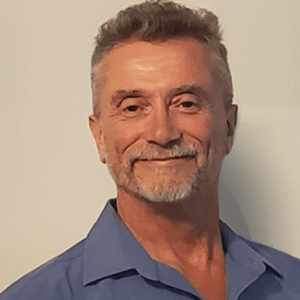
Mark Lemohr is a third-generation healer, professionally practicing since 2008 in contemporary shamanic healing and energy healing. His work has been recognized and referred by administrators and healthcare professionals from some of the most respected medical institutions in North America, including the Albert Einstein College of Medicine in New York, Vancouver General Hospital, St. Paul's Hospital, and Jackson Memorial Hospital in Miami.
Sessions are conducted remotely and are available to clients worldwide. If you cannot be helped, you will receive a full refund, no questions asked.
Is This for You?
This work is worth exploring if you recognize yourself in any of the following:
You've done significant therapeutic work and still feel like something fundamental hasn't shifted
You have a persistent sense of not feeling fully like yourself
You feel emotionally drained, disconnected, or like you're going through the motions
You keep returning to the same patterns, reactions, or emotional states despite your best efforts
You intuitively feel that what you're dealing with has a deeper root than you've been able to reach
If that's you: you're not imagining it, and you're not out of options.
Ready to explore whether this work is right for you?
Start with a conversation. Sessions are available worldwide, conducted remotely.
Frequently Asked Questions
Is energy healing a replacement for therapy?
No. Energy healing and shamanic healing are best understood as complementary practices. They address dimensions of wellbeing that talk therapy doesn't reach, but they work best alongside, not instead of, appropriate medical and psychological care.
Can sessions really be done remotely?
Yes. Remote shamanic and energy healing sessions are a well-established practice. Physical distance does not limit the effectiveness of this work. Mark works with clients across North America, Europe, Australia, and internationally.
How is this different from what I've already tried?
Most conventional approaches work at the level of the mind and behaviour. Energy healing and shamanic healing work at the level of the body's energy system and the soul, addressing trauma and fragmentation at their root, not just their surface expression.
What if it doesn't work for me?
Mark offers a straightforward guarantee: if he cannot help you improve your condition, you will receive a full refund.
No questions asked.
Important Notice:
Mark Lemohr is not a medical professional and does not provide medical diagnosis or treatment. This work is intended to support overall wellbeing and is best used alongside care from licensed medical and mental health professionals. If you are experiencing a medical or mental health emergency, please contact your local emergency services immediately.